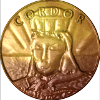
Divination Explained: The Deck of Stars
This text is produced and written by the natural born seer Aunrae, retainer of house Xunviir. This book was published on Mirtul 9th, AR 158 as an entry piece for the Erudite Arcanum.
========================================
The Deck of Stars is a powerful set of cards that often have baffled and confused many new, spritely seers. If you are reading this, perhaps you are an interested party, or new to the art of Divination yourself. In which case, I invite you to read other tomes as this book will specifically only explain how to interpret and use the Deck of Stars. I encourage you to research more about the school of Divination itself, before bothering with miniscule secrets such as this.
If you have, then we will proceed.
---------------------------------------------
The Deck of Stars is one tool under which a skill Diviner may use when tracking information. The deck itself is extremely detailed with the people it does track, at the drawback that it only tracks certain greater souls defined as Aspects. If your quarry is a person who displays this aspect, then congratulations. You have at your disposal the most powerful means of tracking them than anything on the island of Arelith- next to scrying.
The Deck is comprised of 20 Aspects. These Aspects are all unique and special in some way. While there are many speculations on why these souls gain an aspect, there is little information actually proven about how one becomes an aspect, or loses the aspect. It is commonly agreed and observed that aspects can shift and move freely. The skill of the person does not actually define how someone may attain an aspect. An aspect is applied to someone for their actions in a specific field or trade, rather than how prolific or powerful they are in that given field.
For more known information on each individual aspect, flip to the index at the back of the book.
--------------------------------------------
There are two ways one may use the cards specifically to locate an Aspect. One method is by shuffling the deck and peering at each aspect individually. This method is a way to gain necessary information to identify the aspect, but cannot identify if the aspect is currently active.
The other method is to lay them across a flat surface. By focusing ones Sight through the cards, and thus channelling magic into them, you are able to identify if an aspect is in your general area.
This area, however, is often defined by the entirety of the underdark, or the surface. The range does not seem to go above the surface due to the strange leylines of the island we sit beneath. So in order to track an aspect, one must often change physical location to discern which aspects are active.
Once you have drawn a card, in either way, you will see various things appear onto the cards. These things have very specific meanings.
You will be presented with the name of the aspect first. This is self explanatory.
Second, you will see the main image have an aura displayed. This aura does not actually represent the aura of the aspect. Rather, it is a tell for what the aspect has recently been doing. Fire and death almost always mean battle or hunting. Water almost always means trading, or attempts of trickery. Life typically means they have recently healed someone. Air typically means they have been interacting with magic, whether that be a magical item like a wand or actually casting it. Earth typically means that the aspect is currently crafting something, or participating in a chosen trade.
Thirdly, it will have a vague image of what environment the aspect is currently in. Underneath a roof and walls typically means that the aspect is inside. However, be warned that this can also mean the aspect is in a cave or some sort of temple. When the aspect is in a natural environment, it displays nothing or an open sky.
Fourth, It will depict a vague image of the aspect themselves. You will be able to discern clearly their skin color, hair color, and their race. However, vivid details are blurred out due to the aspects ever changing life.
Fifth, a second creature or person may appear in the aspects card. This is a person the aspect often travels with, or currently is travelling with. They will often be a close ally of the aspect which leaves an imprint of their aura on the card for cycles on end. Sometimes this imprint may retain for several cycles even if the aspect discontinues travelling with this second person.
Sixth, a menacing figure almost oft shows itself in the image of the card. This figure is the opposite of the second as it will be an imprint of the last soul to attack or do battle with the aspect. Sometimes a card may not reveal this third figure at all. This only happens if the aspect does not participate in violence against other major souls. Or at least they do not do enough battle with another to inflict an imprint.
Keep in mind that sometimes the leylines mess with the cards. Meaning the magic does not always appear up to date, such as the second figure remaining for several cycles. As with much of the school of divination, there is a lot of guesswork and ground work involved with using the cards to actually keep track of these individuals. It is often beneficial to do so, no matter how seemingly tedious these cards are because most of the time the aspect is a person at the center of a lot of attention or activity.
----------------------------------------
Index of Aspects:
-The Warlord
This aspect is often associated with those who lead others into battle. People who attain this aspect are typically mundane warriors with extreme skill in the blade. They often are getting into skirmishes.
-The Archmage
This aspect often attaches itself to extremely accomplishes mages. However, differentiating between the battlemage, the magical prowess of this aspect is often associated with none offensive magic. Therefore, the Archmage tends to attach to extremely learned teachers of the Art often practicing abjuration, transmutation, or conjuration spells.
-The Craftsman
This aspect is extremely self-explanatory. Almost always attaches to souls possessing the earth aura. Often times it is a member of the peasantry or common birth who is a well trained tradesmen.
-The Deceiver
The Deceiver is a tricker sort. Not to be confused with the trickster, the Deceiver is often times associated with one who closely stalks the shadows. Not much information is known about this aspect due to its nature.
-The Lifebringer
The lifebringer is more often than not always a member of clergy. This aspect often associated with a clergy member who raises the dead miraculously through the power of their divine god. This aspect rarely changes.
-The Deaths Hand
The Deaths Hand is an aspect often associated with prolific animators. Currently, I hold this aspect. From my personal findings, I do not believe that an aspect is simply applied to the most prolific of animators or even the most skilled, but to the frequency in which the animator interacts with undeath or death itself. You can identify this aspect as them having a dried skull above their usual aura.
-The Smith
Like the craftsmen, this aspect is extremely self explanatory. This aspect often attaches to prolific smiths.
-The Slayer
This aspect is often associated with those prolific in slaying others prominent souls. These being powerful souls, such as other adventurers.
-The Battlemage
Like the Archmage, this aspect is often applied to people who extreme magical prowess. The difference being that the Battlemage tends to use magic in battle against others. Evokers, conjurers, enchanters, and other forms of offensive magic using mages may gain this aspect.
-The Merchant
Like many of these cards, the name defines the role this aspect plays. The merchant often attaches to those prolific in many ways and rules of trade. This aspect is a master negotiator and may be able to swindle just about anything to anyone.
-The Nurturer
This aspect is often applied to members of clergy. Often it is applied to those who have an overtly giving nature. Thus, making observation difficult as this aspect almost never appears in the underdark.
-The Trickster
This aspect is often times applied to those with similar skills to the deceiver. Often times a warlock or a rogue-type, as these kinds of people tend to be skilled in the art of disguise and trickery. The Trickster is someone who almost always is taking on different personas or disguises to trick others. A prominent member of our very own Erudite Arcanum was once this aspect for a long time.
-The Provider
The providers aspect is plagued in mystery. Though I suspect that it is somehow connected to the Nurturer. Little information is gained on this aspect.
-The Soulstealer
This aspect is often similar to the slayer. They are prolific in the taking of lies in some form or another. Typically through magical means. Thus, soul-stealing.
-The Judge
Typically inquisitors or judges. This aspect often applies to those of knightly background on the surface. Though there have been some, such as priests of Bane, to receive this aspect. It is unknown the circumstances for how one does.
-The Artificer
Often mages skilled in the art of transmutation and golemancy. The Artificer is often a mage who is well versed in the crafting of golems.
-The Templar
The templar aspect is often attached to divine extremists. Whether it be knightly sorts dubbed as paladins or the notorious black guards, this aspect almost always manifests with one or the other. Why or how it manifests is not particularly known, but it is speculated to have to do with their divine ability to detect imperfections of the soul or other specific power given to them through their faith.
-The Scourge
The scourge is often someone closely associated with torture or pain. Matrons tend to share this aspect from time to time due to the very nature of and society of the Ilythiiri. Alternatively, slavemasters may also take this role due to the pain inflicted on newly attained and trained slaves.
-The Shaman
Typically the Shaman aspect will be one well versed in the natural cycle. A druid or a ranger of the deep caves or forests up above. How one attains this aspect is unclear, but their association with nature is undeniable.
-The Undertaker
Not much is known about this aspect. It is shrouded in mystery and the name itself gives away no discernable purpose or reason for existence.
Divination Cards Projection
It has been stressed in his first paper that magic exists in all things. In this paper, he would elaborate on this theory and present his findings, and his ways to use and abuse this knowledge from the point of view of a diviner with his unique set of skills and power.
The Weave is a good name for the monstrosity that Mystra has created, this ease of drawing spells from a lawful order of strings is a crutch that blinds many wizards to these opportunities for power, as they need only remember and recall the specific phrases and words of power, and keep them in their mind as they prepare, so they would finish casting them.
Casters such as he do not have to see any of this order to make use of it, they do not pull strings, but grab the firmament of magic and tear it apart, and this is why they are subject to the entropy Keeper Xalyth speaks of at length, he believes. As a tangled string of magic is forcibly pulled from the Weave, it takes others with it, gives them new form as decided by many things, such as the spell the caster has intended, his emotions, the weather, effects of faerzess clouds, and whom he is casting on. He will study and elaborate on these effects in the future as he observes and documents them.
But he digresses,
This weave, this crutch, keeps casters from comprehending the magic in all other living things, and their wild strings. Most are weak, useless strings of magic, unless one is the strongest of magicians, they would tear at a glance or a breath. But this does not mean they cannot be observed and certainly does not mean they cannot be used.
Such as his Entangler does, he has attempted to reach these strings and manipulate them. What he does will unlikely have any potential for the spilling of blood, but it is interesting to him, and yet unresearched!
He has been made a deck of cards. He elaborates:
he deck of cards has chosen the appearance of a deck of cards, fifty-five in number, twelve cards in four classical suites of heart, spade, club, and diamond, and three jokers.
Throughout this past month, he has worked on constructing a magical device to collect and decipher these weakest, thinnest, most fragile of strings.
He has begun his work with creating magic sensitive papers from malachite infused dust of softwood that has grown near the arcane tower of the surface. He had applied glue made from the horn of a red dragon, mixed in with a ratio of ten to one, once it had dried, he had tried to activate it by casting a simple light spell and infusing the paper with his magic.
It exploded.
(he does not believe it was the inherent entropy of his skill that had caused it)
He had tried again and again with the results of fire, strange noises and lights, ants, and a small earth elemental that has been pulled away from its plane of existence, until he had lowered the amount of the magically sensitive softwood dust in the mixture to 48.5 percentage of wood dust in the mixture, and adding fibrous wheat dust to give it strength.
The paper would not accept magic at all, in this, but he had contaminated a batch with a drop of his sweat, and as the sheet dried it has taken the appearance of a large playing card. He did this once more, using smaller sheets, and contaminating them with his sweat, until all the aforementioned cards have emerged, more, take no shape and remain useless.
When touched with naked skin, the deck fills itself with the purpose of the one who gave it this weakest of essences, and he is able to make sense of the swirling clouds in it, and give it purpose. He sees in it, a friend, a foe, the past and the future.
Now, it is only in glimpses, but he is working on attuning it to his magic and will report when he has more information.
Cassius Sjeckyik - (13/3/146 AR.)